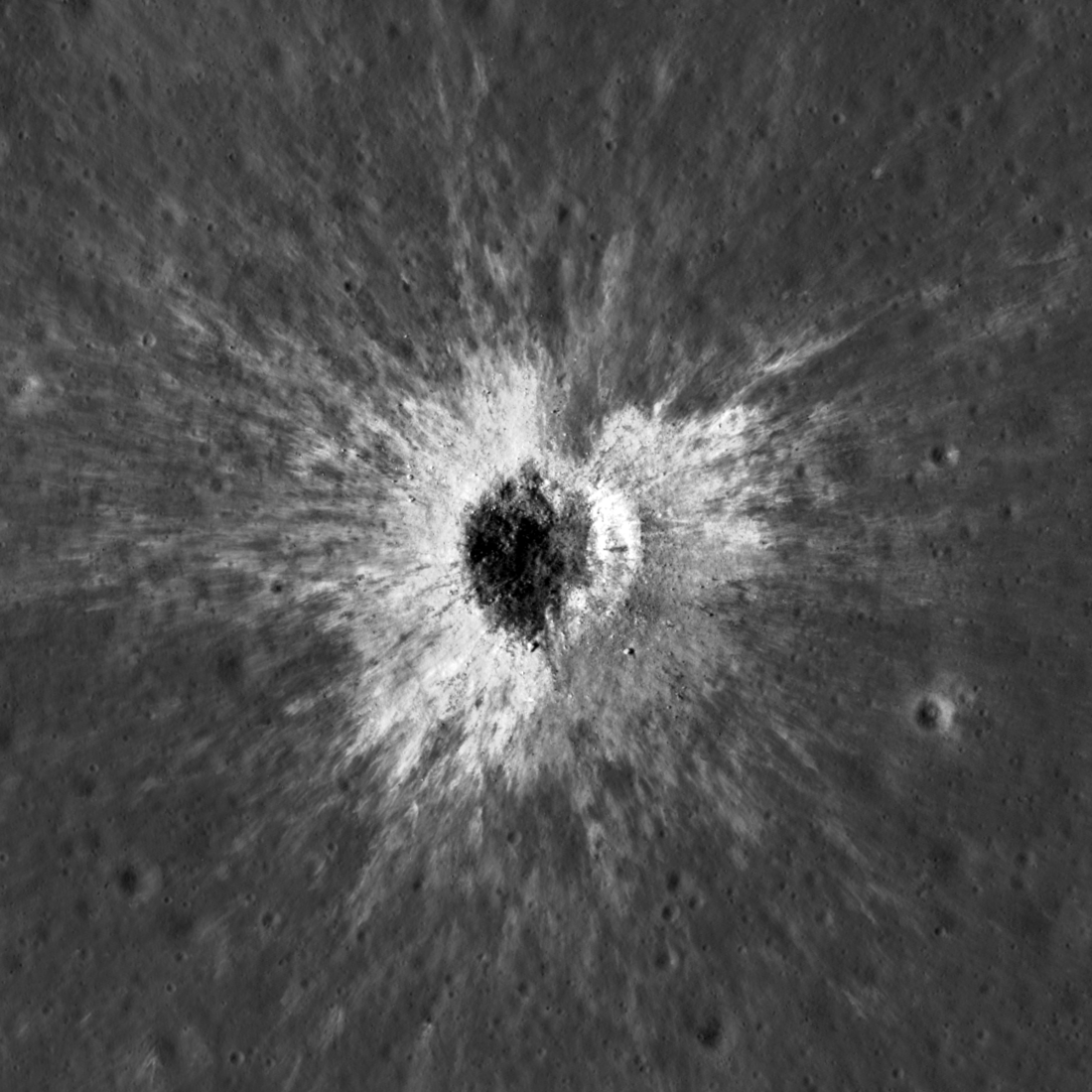
A truly amazing event occurred sometime between April and May 2024: a new 222-m-diameter crater formed! The crater (1.3536°N, 67.1765°E) was first identified in a Wide Angle Camera (WAC) temporal ratio (ratio of two images of the same location and similar lighting, taken six or more months apart). At the time (late summer 2025), the LROC team queried the NAC database and found several images taken before the crater formed, but none after.
Over the next six months, the NACs acquired images during every opportunity, which occurs for only a few days each month. Images with the Sun high overhead reveal albedo (brightness) contrasts, while low-to-the-horizon images emphasize small landforms such as boulders. Illumination is optimal for stereo imaging when the Sun is around 45° above the horizon (either mid-morning or mid-afternoon). Stereo pairs are processed into detailed digital terrain models from which topographic maps are derived. Over six months of imaging and processing the data into various map products, the scientific significance of this new crater, now named McGetchin, became apparent.
Scientific highlights include:
1. The great distances at which we detected disturbances to the surface - over 100 kilometers from McGetchin crater.
2. As the impactor hit the surface, the high-speed jetting of material must have been at angles higher than previously thought typical (>10° vs. roughly 2°)
3. The deposition of the continuous ejecta blanket (blanket of ejected material near the rim) is more complicated than previously thought. It appears there are at least two waves of ejecta, with some ejecta flows extending across the surface for significant distances.
These observations speak to the physics of impact cratering and can improve models of impact ejection from first contact to crater collapse. This cratering event emphasizes that long-lived assets on the Moon must be engineered to withstand high-velocity small-particle impacts from distant impact events. Read more about McGetchin crater in Science Advances.
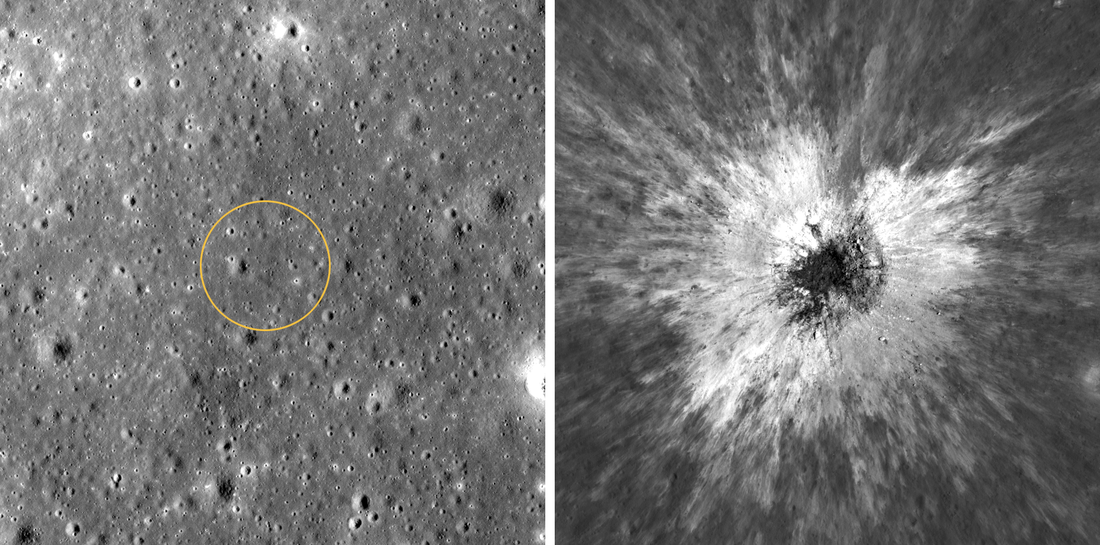
The topographic map created from new NAC observations shows that the crater has an average diameter of 222 meters, a depth of 43 meters, wall slopes averaging 24° (but reaching nearly 40° in places), and a rim that rises 8 meters above the pre-existing surface on average. These dimensions closely match current models of crater formation based on observations of other lunar craters, as well as those on Earth and in laboratory simulations.
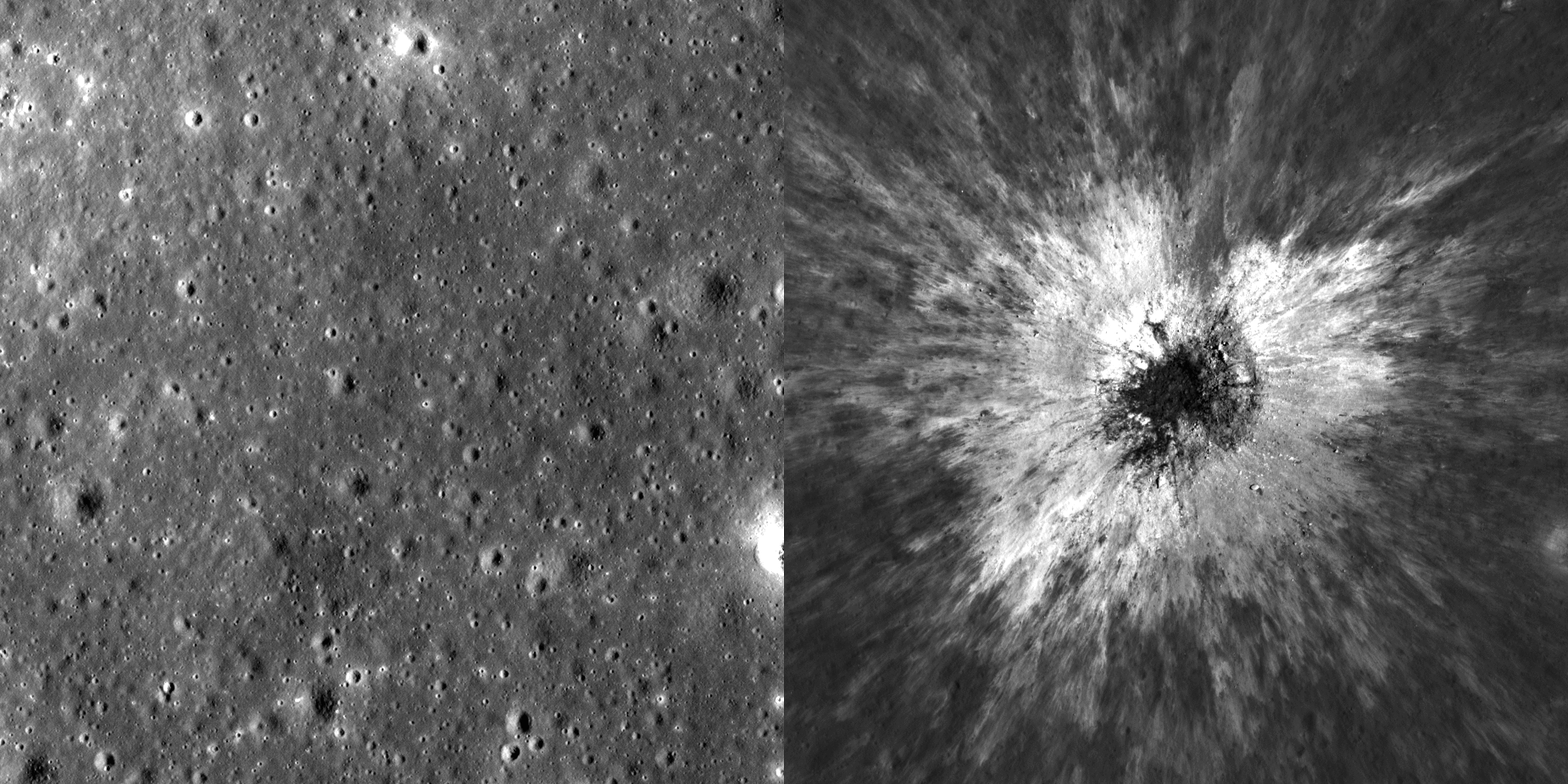
McGetchin crater formed on the boundary between mare basalts (volcanic rock) and the ancient anorthositic highland crust. The lower albedo (brightness) of the SE portion of the ejecta surrounding the crater may indicate this contact. Basalt reflects less sunlight than anorthosite, and the contact between the two is mapped to run diagonally (lower left to upper right) through the crater. The contact is not readily apparent in the "before" images because billions of years of impacts have smeared the contact in the upper meters of the surface: basalt was thrown onto the anorthosite, and anorthosite was thrown onto the basalt. This surficial mixing blurs sharp compositional mixing over time. However, during crater formation, materials from twenty or more meters below the surface were ejected and emplaced around the outside of the crater.
Impact crater formation models predict that a crater of this size should form every 132 years on the Moon; thus, this event is a once-in-a-lifetime occurrence.
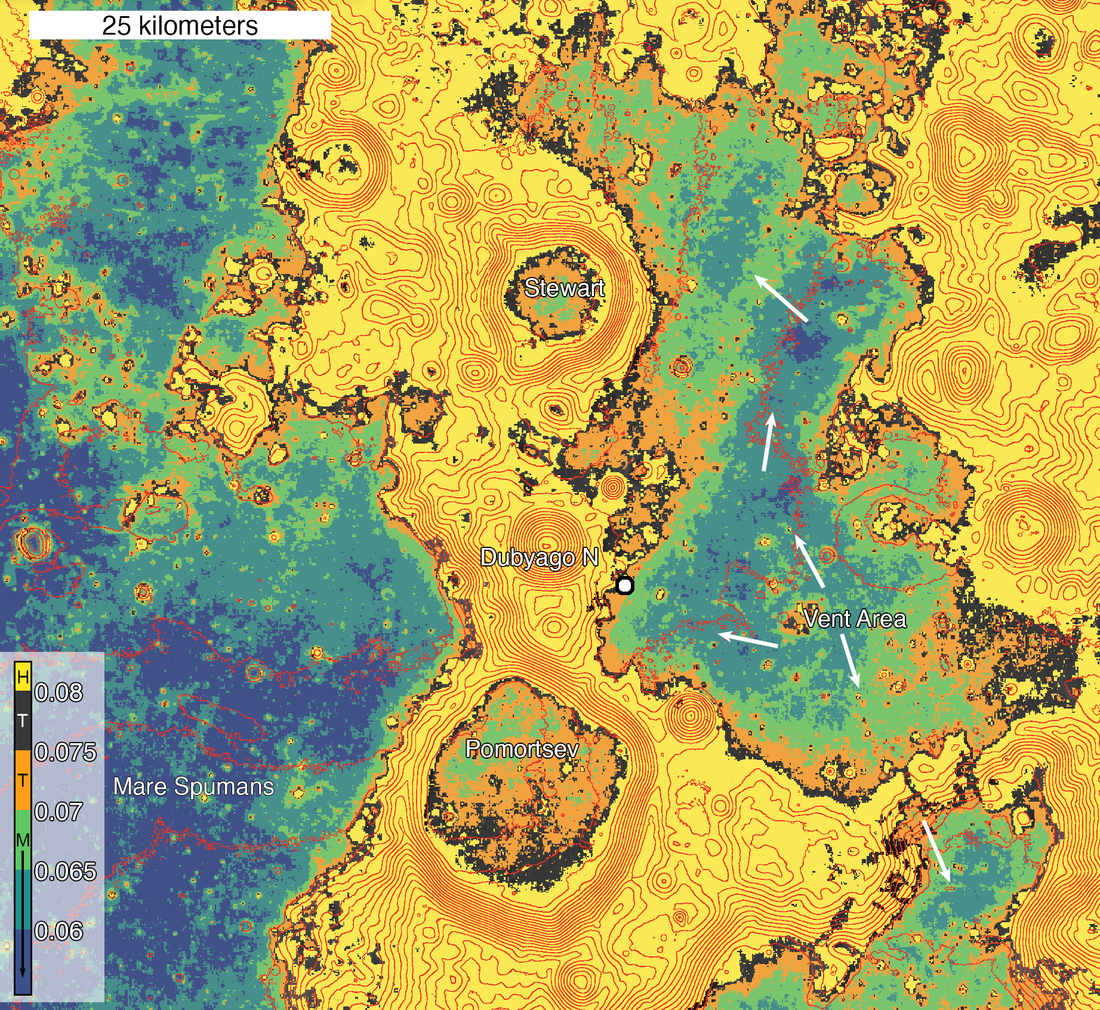
The LROC team proposed the name McGetchin to the International Astronomical Union (IAU) to honor Thomas McGetchin, a pioneering lunar scientist during the Apollo era of lunar exploration. Dr. McGetchin made significant contributions to our understanding of impact cratering mechanics, and, appropriately, McGetchin crater is revealing new details of impact crater formation.
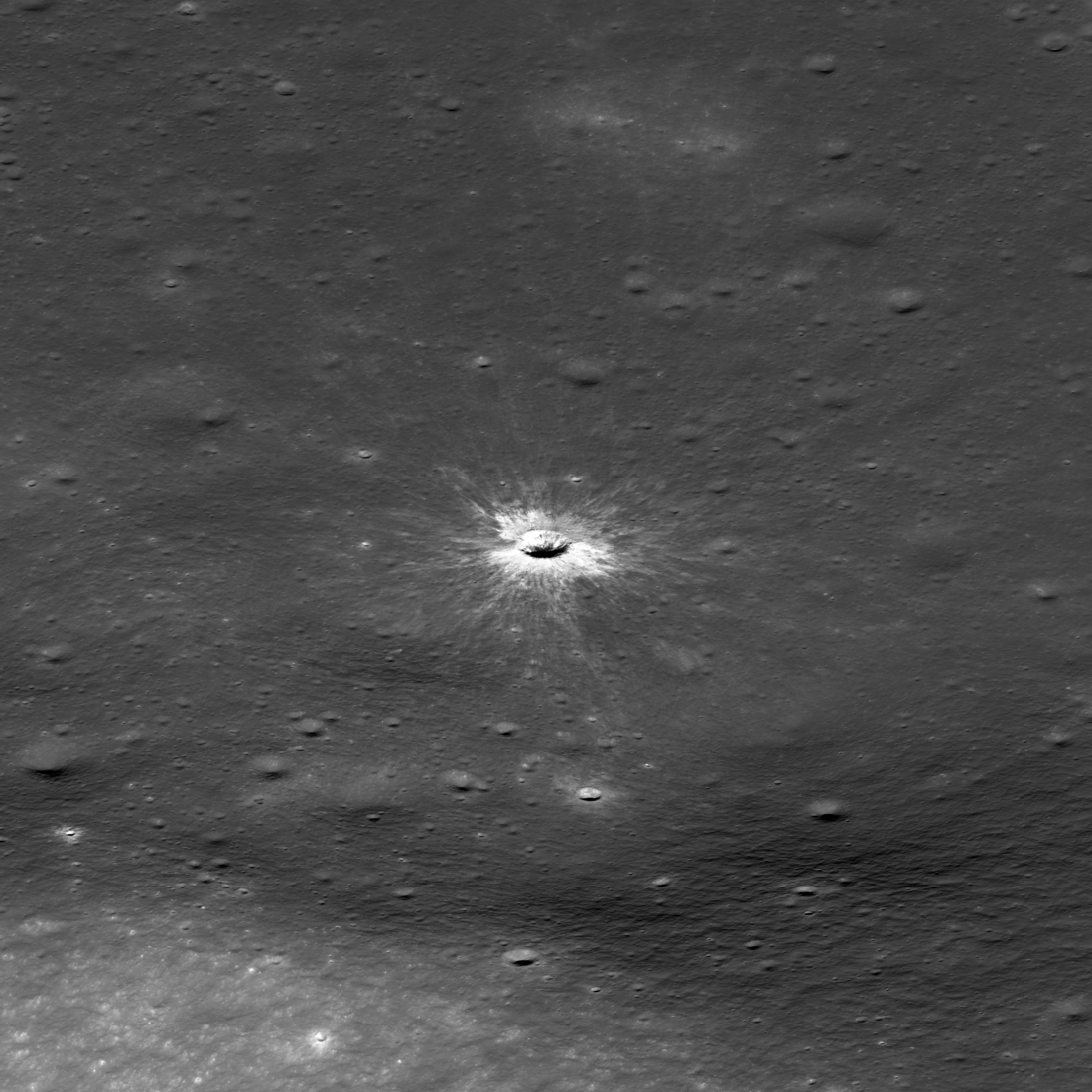
Explore McGetchin crater and the complex lunar environment in which it formed. Keep a sharp eye out for subtle distal effects to the surrounding terrain. LROC M1542395927L,R [NASA/GSFC/Intuitive Machines].
As recently reported in the news, not all impact craters on the Moon are natural; some form when spent rocket stages, orbiters, and landers crash into the Moon.
Related Featured Images
A New Freckle on the Face of the Moon
New Impact Crater on the Moon!
Published by Mark Robinson on 16 September 2026